
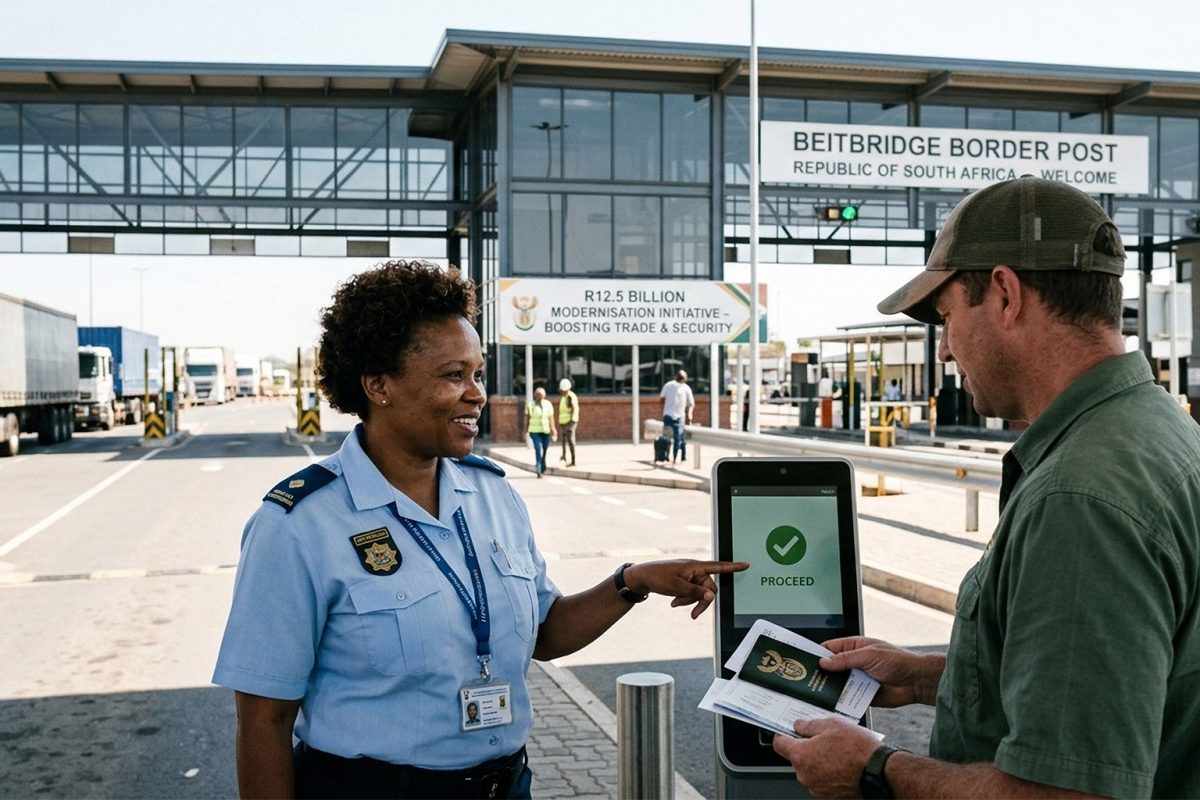
South Africa has announced an ambitious infrastructure programme aimed at transforming its land border posts, with officials positioning the initiative as a catalyst for economic growth, improved security and a better travel experience.
The project, valued at R12.5 billion, will focus on rebuilding and modernising six of the country’s busiest ports of entry. These include crossings linked to neighbouring states such as Mozambique, Zimbabwe, Botswana, Eswatini and Lesotho. Authorities say these sites handle the overwhelming majority of cross-border movement, making them central to both trade and migration management.
Home Affairs Minister Dr Leon Schreiber described the overhaul as a long-term intervention designed to replace outdated facilities with efficient, technology-driven systems. According to the department, many border posts currently struggle with congestion, aging infrastructure and fragmented processes, which have contributed to delays and increased costs for businesses operating across borders.
The planned upgrades will introduce integrated digital solutions to streamline the movement of goods and travellers. By reducing manual procedures, the government aims to cut waiting times and improve the reliability of logistics networks. Officials believe this will enhance South Africa’s competitiveness as a regional trade hub, particularly within the context of growing intra-African commerce.
Security is another central pillar of the initiative. The modernised facilities are expected to strengthen surveillance and enforcement capabilities, helping authorities combat illicit trade and irregular migration. The introduction of advanced technologies, including automated systems and enhanced monitoring tools, is intended to close existing gaps that have been exploited by criminal networks.
The programme will be implemented through a public-private partnership, allowing the state to leverage private sector expertise and funding. This model is expected to accelerate delivery while ensuring that the upgraded infrastructure meets international standards for border management.
Beyond economic and security benefits, the government has emphasised the impact on travellers. By redesigning border facilities and processes, the project aims to create a smoother and more predictable experience for passengers, particularly at high-traffic crossings where delays are common.
Officials argue that the overhaul represents a strategic investment in the country’s future, aligning border management with broader goals of economic integration, safety and service delivery. As construction progresses over the coming years, the success of the initiative will likely be measured by its ability to balance efficiency with robust control in an increasingly interconnected region.