
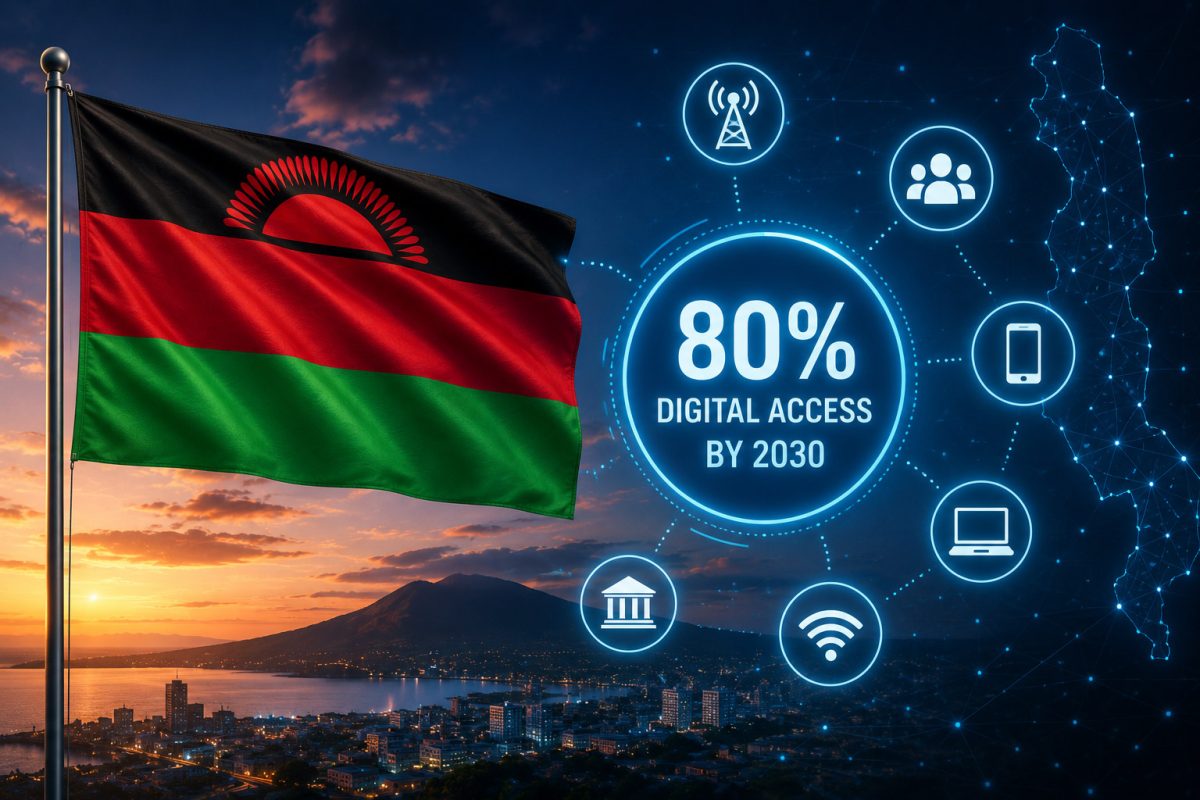
Malawi has unveiled an ambitious national digital transformation roadmap aimed at expanding access to digital services to 80% of the population by 2030, as the government intensifies efforts to modernize public services, improve connectivity, and drive economic growth through technology.
Presenting the strategy in Parliament, Minister of Information and Communications Technology Dr. Shadric Namalomba outlined a series of reforms designed to accelerate digital inclusion and strengthen the country’s digital infrastructure. The plan places technology at the centre of Malawi’s long-term development agenda, with a focus on expanding internet access, digitising government services, and improving affordability for citizens.
A key pillar of the strategy is the government’s commitment to significantly increasing digital access from current levels to 80% by the end of the decade. Officials view the target as critical to unlocking economic opportunities, enhancing service delivery, and ensuring broader participation in the digital economy.
Addressing lawmakers, Namalomba acknowledged the scale of the challenge, noting that internet penetration remains relatively low despite recent progress in broadband expansion. He emphasized that digitisation is no longer simply a technology issue but a national development priority that can improve governance, stimulate innovation, and create new economic opportunities for citizens.
The government also highlighted progress in reducing internet costs, with wholesale bandwidth prices falling significantly in recent years. Authorities believe lower connectivity costs will encourage greater internet adoption and support the growth of digital services across sectors such as education, healthcare, financial services, and public administration.
The digital transformation agenda is supported by broader infrastructure investments, including plans to expand mobile broadband coverage, deploy additional telecommunications towers in underserved areas, and connect schools and public institutions to the internet. These initiatives form part of a coordinated effort to bridge the digital divide, particularly in rural communities where connectivity gaps remain a major challenge.
With strong political backing from President Arthur Peter Mutharika’s administration, the roadmap also prioritises institutional reforms, public-private partnerships, and the digitisation of government services. Officials say the measures will help create a more efficient public sector while positioning Malawi to compete in an increasingly digital global economy. As implementation gathers pace, the government sees digital transformation as a catalyst for inclusive growth, improved service delivery, and long-term national development.