
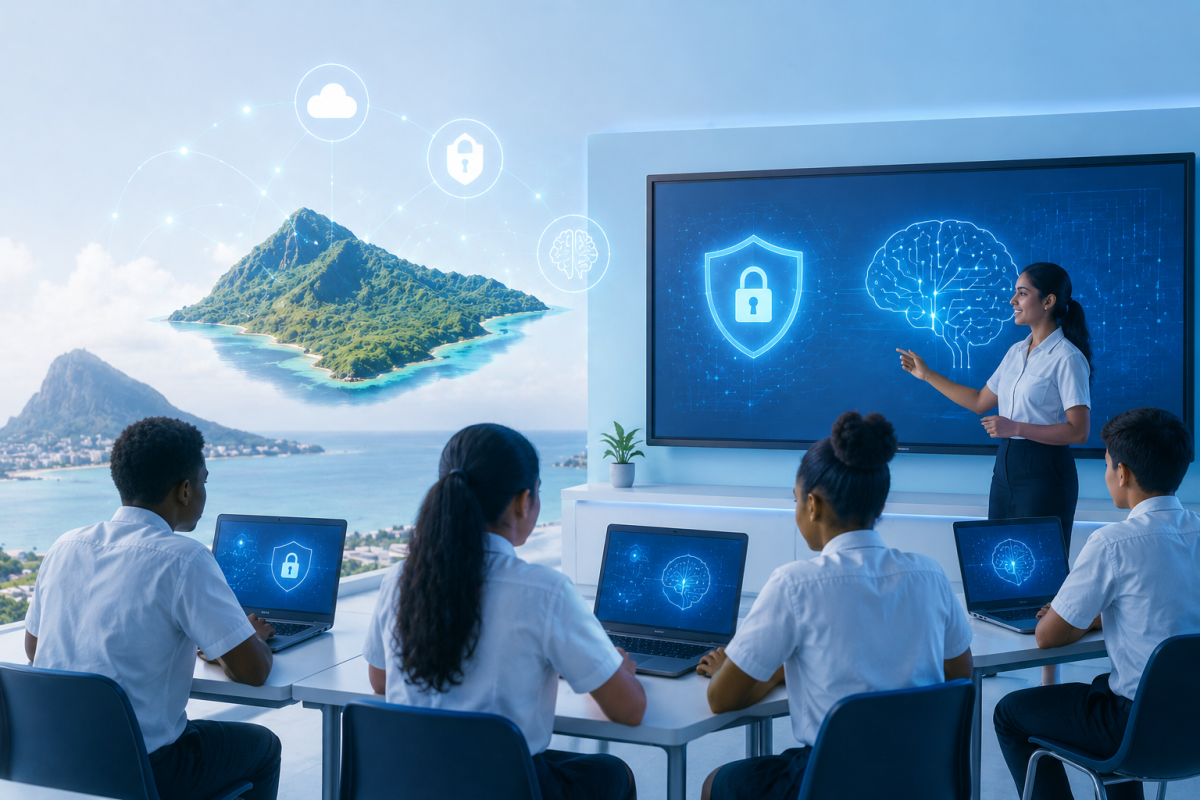
Mauritius has launched a national programme to improve cybersecurity and artificial intelligence awareness among secondary school students, as the country seeks to prepare young people for an increasingly digital economy.
The initiative, introduced by Mauritius Telecom in partnership with the Ministry of Education and Human Resources, is designed to give students practical knowledge for using digital technologies safely and responsibly. Nearly 500 Grade 10 and Grade 12 students from all four education zones took part in the programme’s inaugural workshop.
The programme forms part of a wider national ambition to equip 50,000 Mauritians with skills in artificial intelligence and emerging technologies. Its focus on students reflects growing recognition that cybersecurity awareness and digital literacy need to be developed early as young people spend more time online.
The opening sessions addressed a range of threats facing students and other internet users, including phishing, online scams, cyberbullying and misinformation. Participants were also introduced to responsible and effective uses of artificial intelligence, helping them understand both the opportunities and risks associated with rapidly developing digital tools.
Mauritius Telecom Chief Executive Officer, Veemal Gungadin, urged students to take a responsible approach to technology, while Education and Human Resource Minister, Mahend Gungapersad, welcomed the initiative as an important step towards protecting young people in an increasingly connected environment.
The programme also has a skills-development component. Participating students will receive access to 10 hours of free online training through Amazon Web Services, with the opportunity to earn an internationally recognised certification.
The initiative comes as Mauritius continues to strengthen its digital capabilities and promote technology skills across the population. By bringing cybersecurity and AI education into schools, authorities and industry partners are seeking to build awareness alongside technical competence.
For students, the programme provides an opportunity to develop skills that could become increasingly valuable as artificial intelligence changes education, employment and everyday digital services.
The school-focused approach also supports Mauritius’ broader efforts to develop a digitally capable workforce. Building cybersecurity awareness among younger users could help create a stronger culture of online safety while encouraging responsible adoption of emerging technologies.
As the programme expands, its combination of cybersecurity education, AI awareness and professional certification could provide a foundation for preparing the next generation to participate more confidently in Mauritius’ digital economy.