
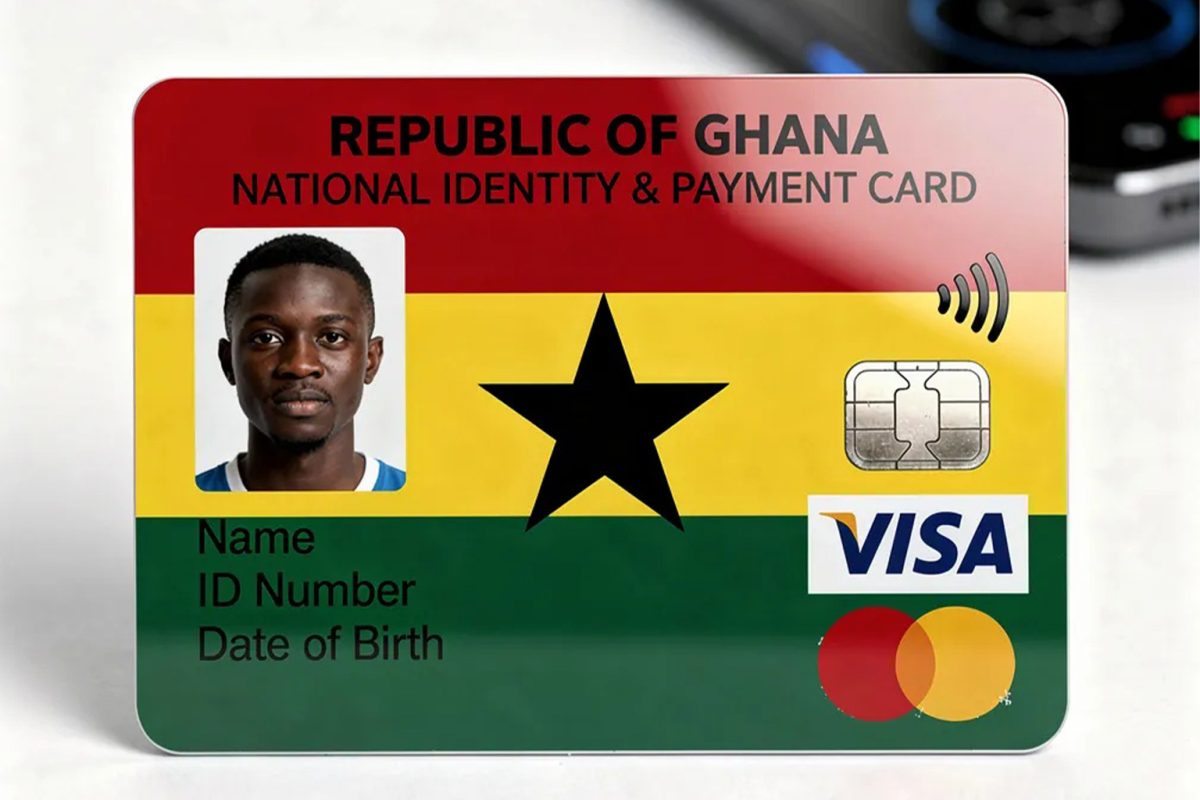
Ghana has taken a significant step in redefining the role of national identity systems by enabling its citizens to make payments directly using the Ghana Card, positioning the country at the forefront of integrated digital public infrastructure on the continent.
The new functionality, introduced by the National Identification Authority (NIA), embeds a digital wallet into the national ID card, allowing users to withdraw cash from ATMs, pay in stores and online, and conduct international transactions across more than 200 countries.
This development transforms the Ghana Card from a traditional identification credential into a multi-purpose digital platform — combining identity, travel documentation, and financial services. According to the NIA, the payment feature fulfills a long-standing vision for the card to serve three core functions: identity, passport, and payments.
The move is also closely linked to financial inclusion. Ghana has historically recorded low credit card penetration — estimated at just 0.6% in 2024 — creating a strong case for alternative payment channels that reach citizens beyond the formal banking system. By embedding financial services directly into a government-issued ID, authorities aim to reduce barriers to accessing financial tools and expand participation in the digital economy.
Importantly, the system is designed as a national platform rather than a single-bank product. The integrated wallet will connect multiple financial institutions, reinforcing interoperability across the country’s payment ecosystem and strengthening the state’s ability to deliver services through secure digital infrastructure.
Beyond payments, the implications are strategic. Identity-linked transactions create a foundation for more efficient public finance, improved service delivery, and stronger economic participation. The model also signals a broader shift underway across Africa — where governments are increasingly viewing digital identity not just as a verification tool, but as a core economic infrastructure.
As African states accelerate their digital transformation agendas, Ghana’s innovation demonstrates how national ID systems can evolve into platforms that support commerce, governance, and citizen inclusion. In doing so, the country has effectively moved the continent one step closer to a future where identity and payments operate as a single, integrated public service.