
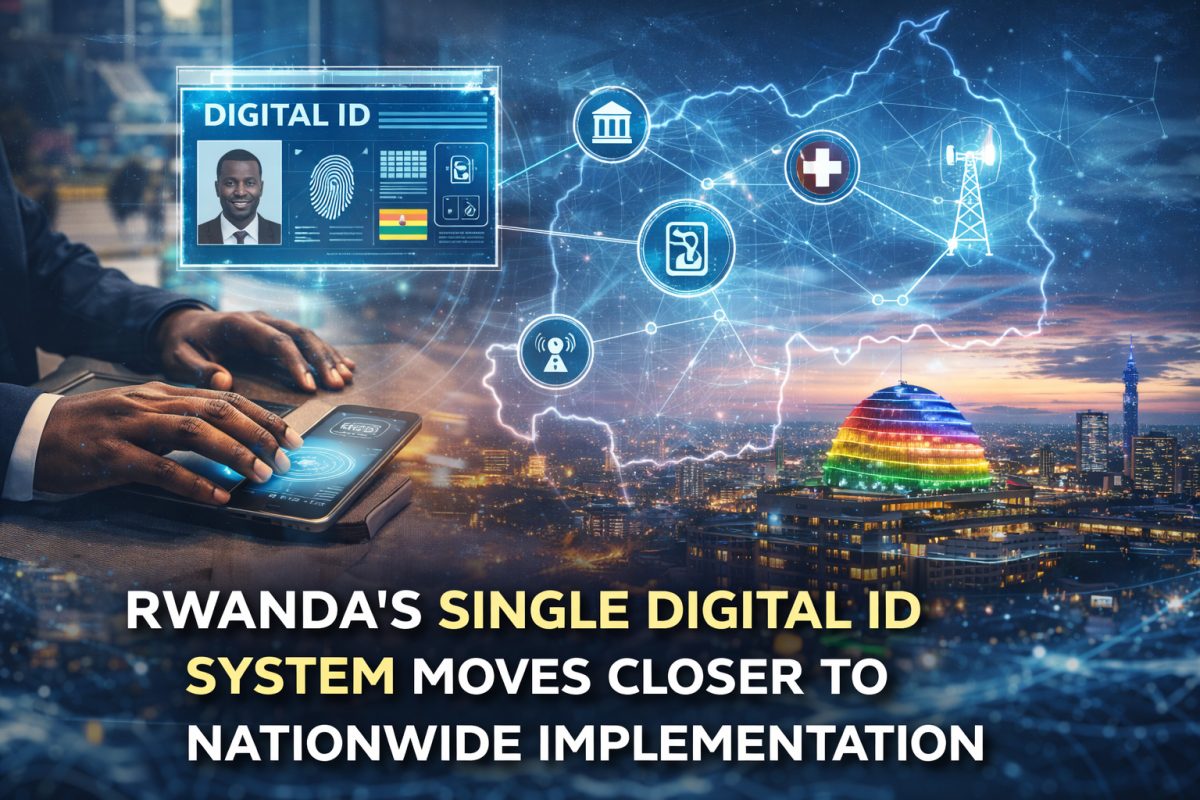
Rwanda is accelerating work on its Single Digital ID System (SDID) as it moves toward a full national rollout by 2027, in what is emerging as one of Africa’s most important digital public infrastructure programmes. The initiative is designed to make digital identity the central means by which citizens authenticate themselves when accessing services across both the public and private sectors.
The government has already been carrying out biometric enrolment for the new system, and authorities said earlier this year that at least 1.5 million people had already been registered. Citizens have been encouraged to take advantage of the current mobile registration campaign, after which registration will be handled through sector offices. In Kigali, the special enrolment operation was scheduled to conclude on 2 April 2026.
According to Josephine Mukesha, Director General of Rwanda’s National Identification Agency (NIDA), the digital ID will become a foundational tool for service access across the economy. She said that by 2027, the credential will serve as the main authentication mechanism for services across government and the private sector, and added that biometric verification will work both online and offline. Mukesha said the new system will help streamline access to services in areas such as banking, healthcare and telecoms, noting that: “Citizens without it may struggle to access services.”
Beyond convenience, Rwanda is also presenting the SDID as an important step in strengthening data protection and inclusion. Mukesha said the system is intended to give individuals greater control over their personal data, including the ability to consent to how information is shared. The programme is also designed to be inclusive, covering newborns, refugees and stateless persons living along Rwanda’s borders, in line with the country’s goal of universal legal identity.
The SDID is a major pillar of Rwanda’s wider digital public infrastructure strategy and forms part of the second phase of the country’s National Strategy for Transformation (NST2) for 2024–2029. It sits alongside other important digital systems such as eKash, Rwanda’s digital payment rail, and Irembo, the country’s digital government services platform, which together are helping to build a more connected digital service ecosystem.
Rwanda’s broader digital acceleration agenda is being supported through the Rwanda Digital Acceleration Project, backed by around $200 million in World Bank funding. Taken together, these efforts underline how Rwanda is using digital identity not only as a registration tool, but as a practical engine for service delivery, economic participation and trusted digital transformation.