
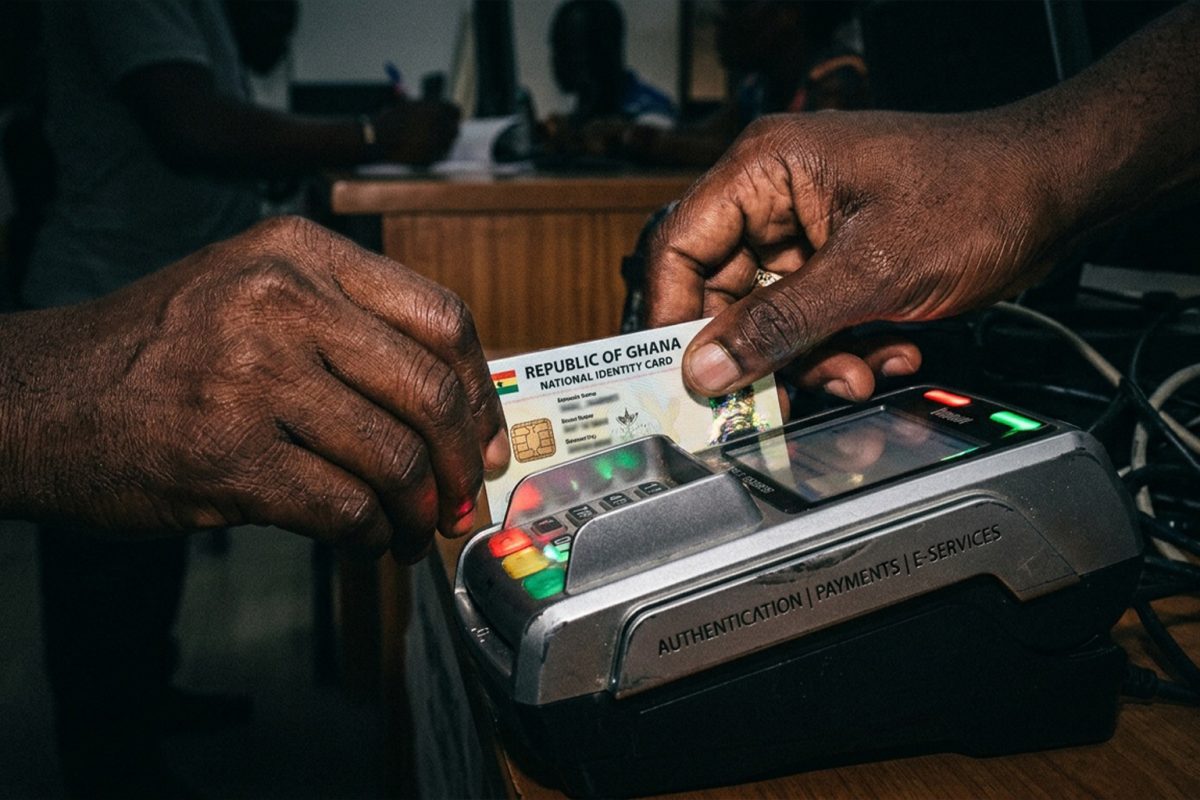
Ghana is emerging as a continental frontrunner in digital identity innovation, following the rapid expansion of its national ID system into a multi-functional platform designed to underpin financial services, public administration, and economic inclusion.
In early April, authorities confirmed the continued rollout of new capabilities linked to the Ghana Card—its biometric national identity system—marking a significant step toward integrating identity with broader digital infrastructure. The initiative is part of a long-term strategy to transform the card into a “multi-purpose” credential supporting authentication, payments, and access to government services.
The Ghana Card already serves as a centralised identity layer, used for SIM registration, banking verification, and passport services. Recent developments aim to extend its functionality further, enabling it to act as a secure gateway for digital transactions and service delivery. Officials say this convergence is critical to building a unified digital ecosystem that reduces fragmentation across sectors.
“Once completed, the Ghana Card will be used as an authentication tool to make or receive payments,” said Yayra Korku Deku, Executive Secretary of the National Identification Authority.
The broader objective is to simplify how citizens interact with both government and financial institutions. By embedding identity verification into a single, widely adopted credential, Ghana aims to lower barriers to accessing services—particularly for unbanked populations—while improving efficiency and transparency.
Analysts view the initiative as a clear example of digital public infrastructure in action. By linking identity, payments, and service delivery, governments can create interoperable systems that support everything from tax collection to social welfare distribution. This approach is increasingly being explored across Africa, including in countries such as Nigeria, Kenya, and Tanzania.
Security remains a central consideration. As identity systems become more deeply integrated with financial services, the need for robust cybersecurity and data protection frameworks intensifies. Industry experts note that technologies from global providers such as Thales and Entrust are often embedded within such ecosystems to support encryption, authentication, and credential management.
There are also implications for the payments landscape. The integration of identity into transaction systems could reshape how financial services are delivered, potentially reducing reliance on traditional card networks while enabling more direct, identity-based payment models.
For Ghana, the strategy reflects a broader ambition: to position digital identity as the foundation of its digital economy. If successfully implemented at scale, the Ghana Card could become a blueprint for other African nations seeking to build secure, inclusive, and interoperable digital systems anchored in trusted identity.