
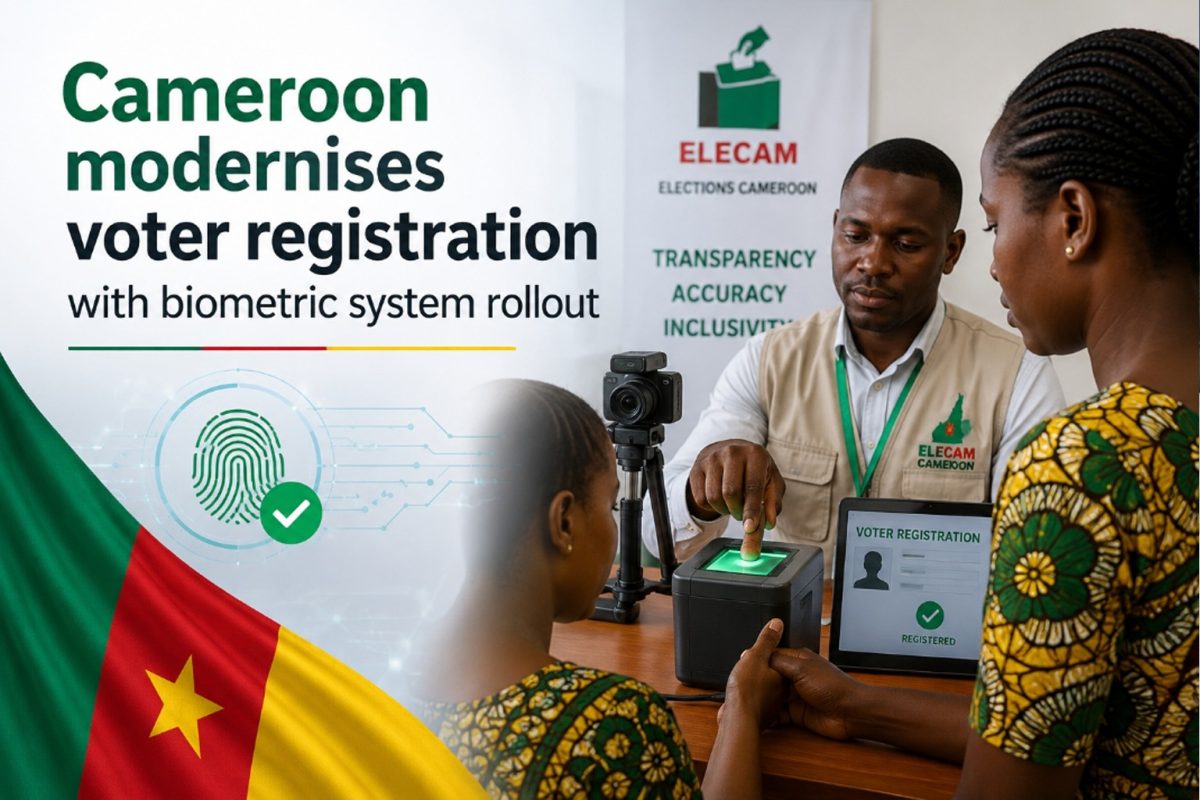
Cameroon has upgraded its national voter registration system through a biometric infrastructure rollout aimed at improving electoral transparency, reducing duplication, and strengthening trust in electoral processes. The system, deployed in partnership with technology providers Laxton and Veridos, has enabled the registration of more than 8 million citizens ahead of national elections.
The rollout introduced portable biometric registration kits designed for deployment in both urban centres and remote rural regions. The devices capture fingerprints and facial data and can operate offline before syncing with central electoral databases, addressing infrastructure gaps in hard-to-reach areas.
According to technical implementation materials from Laxton, the system was designed to improve accuracy in voter identification and reduce risks associated with manual registration processes, including duplication and identity fraud.
Officials from Cameroon’s electoral body ELECAM have previously stated that biometric registration is intended to ensure that “each voter is uniquely identified and recorded only once,” reinforcing confidence in the integrity of the electoral register.
The system forms part of broader government efforts to modernise civil administration and strengthen national identity management infrastructure. It also reflects a wider continental shift toward digitised electoral systems, where biometric verification is increasingly used to enhance governance transparency.
Analysts note that such systems are becoming central to public sector digitisation strategies across Africa, particularly in countries seeking to improve voter inclusion while reducing administrative inefficiencies.
The Cameroon deployment is also seen as part of a wider evolution toward integrated digital identity ecosystems, where electoral systems are linked to national civil registries and broader e-government infrastructure.