
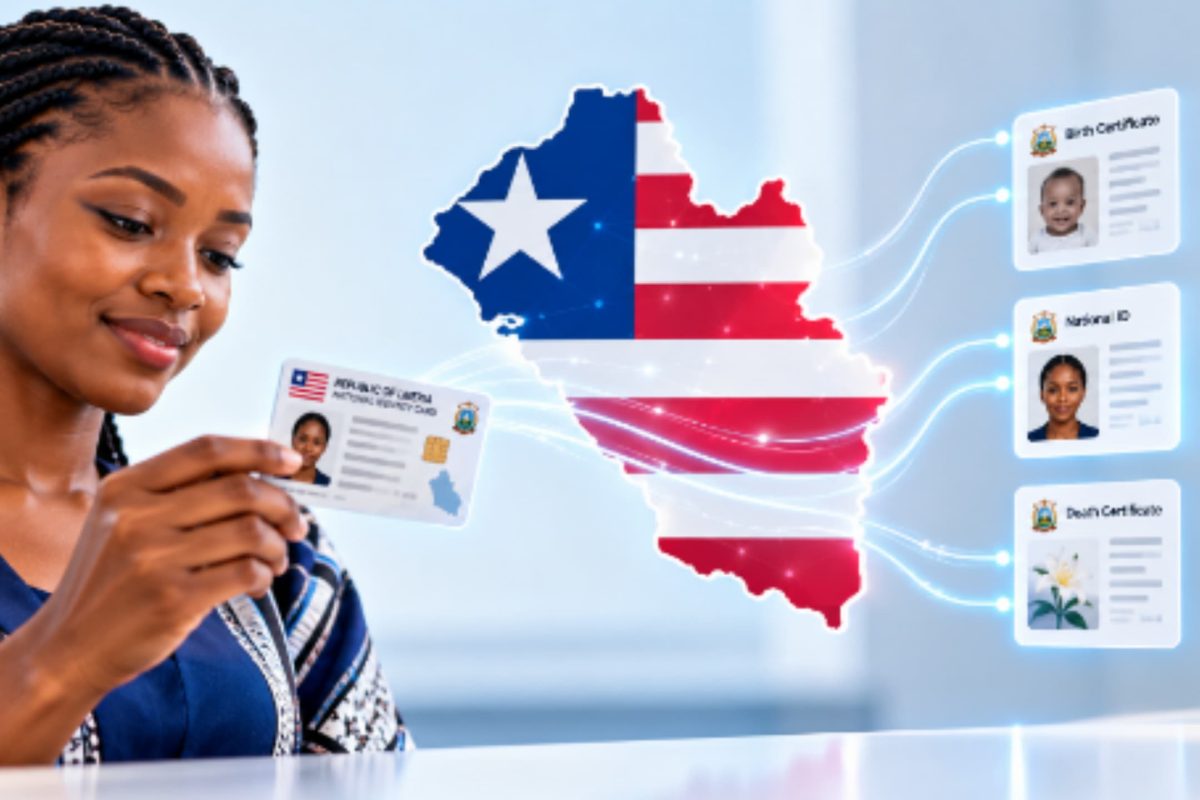
Liberia is preparing to modernise its national identity infrastructure by connecting the national identification system with civil registration and vital statistics records under a proposed US$54 million public-private partnership.
The planned upgrade would create a digital framework linking identity records with key life events, including births and deaths. The National Identification Registry (NIR) says the approach would provide a more continuous record of an individual’s identity throughout their lifetime.
NIR Executive Director Andrew Peters outlined the plans during a press conference in Monrovia, as Liberia’s parliament considers approval of the proposed concession with Austrian State Printing House (OSD). The agreement has already been signed but cannot proceed without legislative approval.
“The proposed NID-CRVS system is therefore intended to provide a more integrated digital framework linking national identification with civil registration and vital statistics,” Peters said.
He added: “The long-term objective is to strengthen the management of identity information through a person’s life. That is, from birth registration and national identification, to the recording of other important life events. Such a system can contribute to better national planning, improved service delivery, and more reliable information for national development.”
While the parliamentary process continues, the NIR is concentrating on preparing institutions and stakeholders for the next stage of the programme. This includes public awareness activities, engagement with relevant organisations and strengthening institutional readiness.
The planned modernisation comes as Liberia continues to address challenges surrounding its national ID programme. Issuance was suspended in June 2025 following administrative and technical difficulties, alongside concerns relating to procurement transparency. The suspension has affected access to services where official identification is required, including banking, telecommunications and other essential services.
Peters said the new programme would go beyond issuing identity cards by establishing a wider digital trust infrastructure. The NIR intends to make biometric registration more accessible, particularly for people in rural and underserved communities where poor roads, limited electricity and weak connectivity can create barriers to accessing government services.
“A secure and reliable identity system can support authorized services in areas including banking and financial services, telecommunications and SIM registration, government payroll and public services, transportation and licensing, social protection, and other services that require reliable identity verification,” Peters explained.
Data protection and national control of identity information are also central to the proposed arrangement. Peters stressed that the partnership would not transfer ownership of citizens’ data to OSD.
“The proposed concession does not mean that ownership of Liberian citizens’ identity information is being transferred to a private company. OSD International is proposed to serve as the government’s technology and implementation partner under the terms of the contract,” he stated.
The NIR says the wider objective is to create a more secure, inclusive and sustainable identity ecosystem while strengthening the foundations for digital public services across Liberia.