
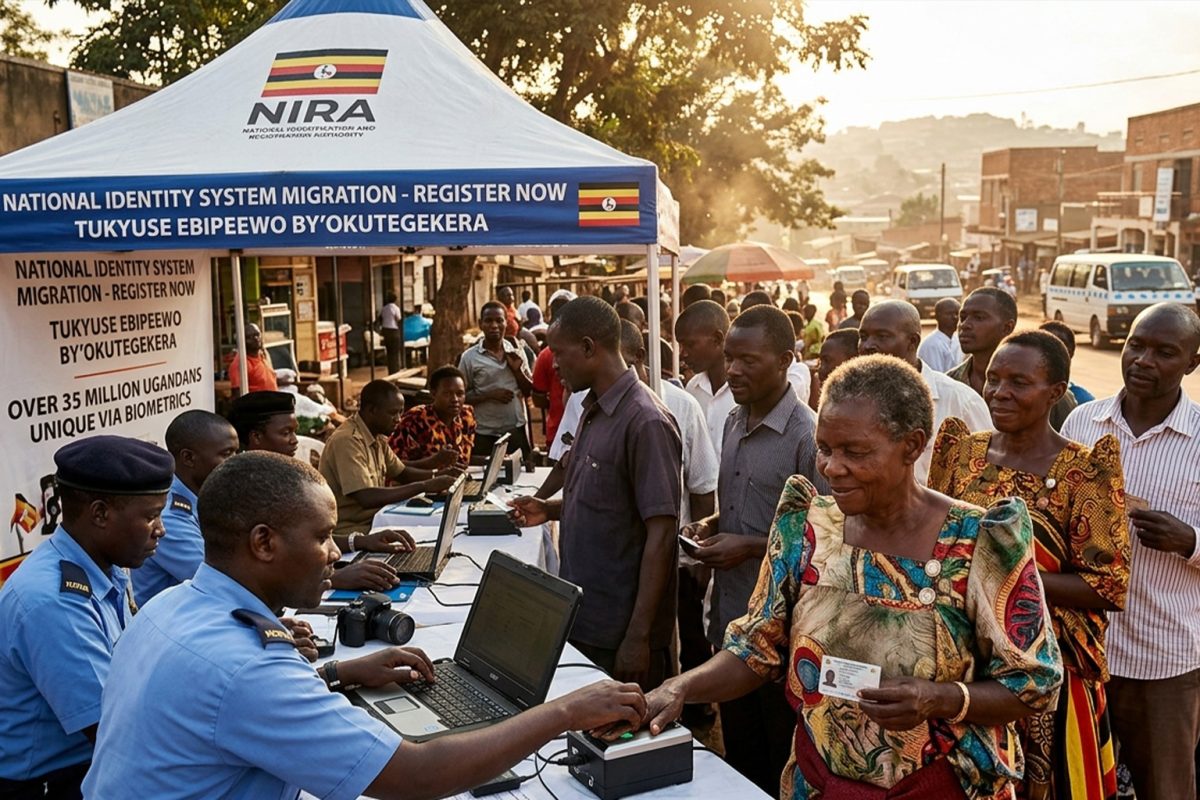
Uganda has completed a major milestone in its digital transformation agenda, successfully migrating more than 28 million citizen records to a new national digital identity system, significantly strengthening the country’s foundational digital infrastructure.
The transition, overseen by the National Identification and Registration Authority (NIRA), consolidates legacy data into a modern biometric system designed to improve service delivery and identity verification across both public and private sectors. Officials say the upgrade is central to Uganda’s ambitions to expand e-government services and enhance cybersecurity resilience.
Speaking during a press briefing in Kampala, NIRA Registrar Claire Ollama confirmed the scale of the achievement, noting that “the new national register has over 35 million Ugandans who can be uniquely identified via biometrics.”
The expanded database is expected to underpin a wide range of services, including digital payments, voter verification, and access to government programmes. Authorities say the system integrates multiple functions such as registration, renewals, and corrections, streamlining previously fragmented identity processes.
The migration effort forms part of a broader national drive to modernize Uganda’s digital public infrastructure. Technology providers supporting the rollout have implemented modules aimed at improving system reliability, data security, and interoperability across government platforms.
However, officials acknowledged ongoing operational challenges. State Minister for Internal Affairs Hon. Gen. David Muhoozi assured the public that technical issues—such as QR code scanning errors and system integration concerns—are being addressed. He emphasized that improvements will continue “as they arise,” signalling a phased approach to system stabilization.
Despite progress, uptake remains uneven. Of the millions of ID cards printed under the new system, a significant proportion have yet to be collected, highlighting persistent gaps in citizen engagement and last-mile distribution.
Analysts say the strengthened identity system will play a critical role in advancing Uganda’s digital economy, particularly in enabling secure digital transactions and improving targeting of public services. A robust digital ID framework is also seen as essential for enhancing cybersecurity safeguards and reducing fraud.
The government has reiterated its commitment to ensuring universal enrolment, with officials indicating that registration and renewal will continue as routine services nationwide. As Uganda builds out its digital ecosystem, the success of its identity platform is expected to serve as a cornerstone for future innovations in e-government and financial inclusion.