
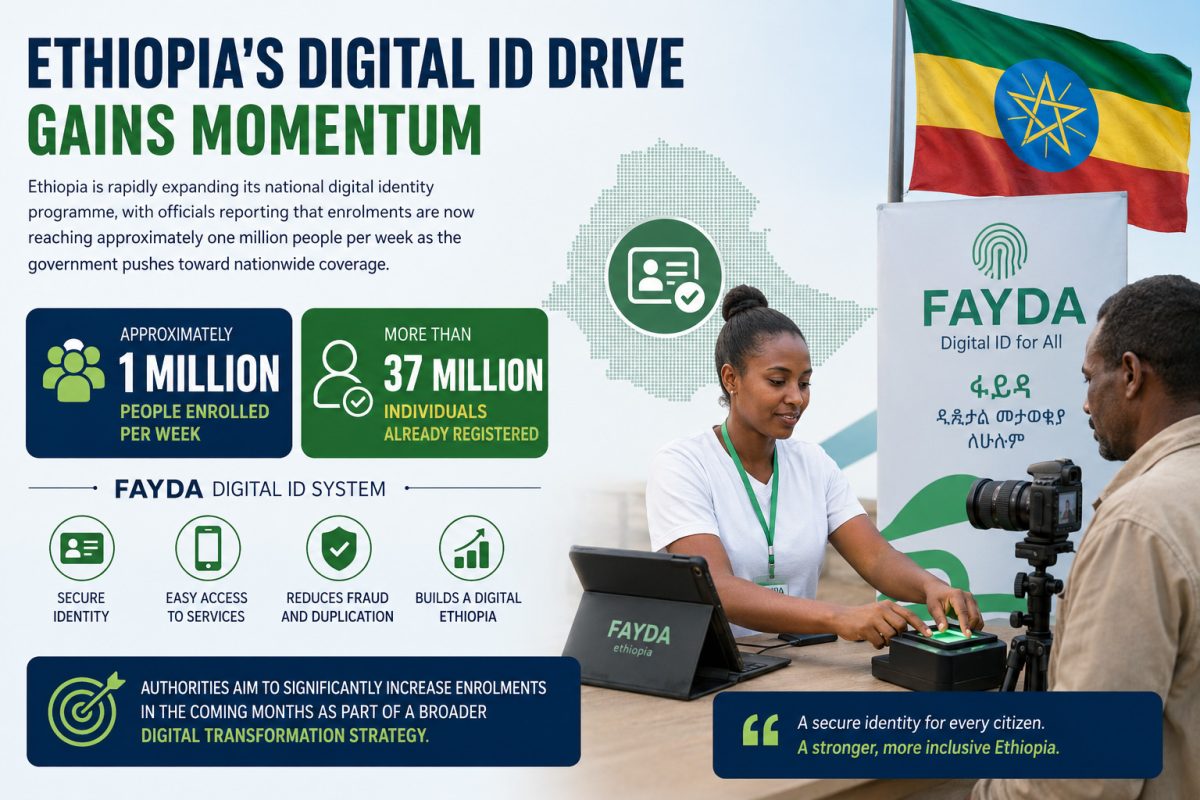
Ethiopia is rapidly expanding its national digital identity programme, with officials reporting that enrolments are now reaching approximately one million people per week as the government pushes toward nationwide coverage.
The update, shared by the National ID Program (NIDP), highlights the growing scale of the Fayda digital ID system, which has already registered more than 37 million individuals. Authorities aim to significantly increase that number in the coming months as part of a broader digital transformation strategy.
The initiative is a central component of Ethiopia’s long-term plan to modernise public services and expand access to digital platforms. By linking identity systems with government and financial services, officials hope to improve efficiency and inclusion, particularly in underserved areas.
Programme leaders have stressed the importance of public awareness and stakeholder engagement in driving adoption, noting that widespread participation will be essential to achieving national targets.
Industry experts say digital identity systems are key to enabling secure e-government services and digital payments.
“Digital ID is foundational for inclusive digital economies,” said a spokesperson from Visa. “It enables secure transactions and broadens access to financial services.”
The rapid rollout is also supported by investments in infrastructure and technology partnerships, which are helping to scale enrolment efforts across urban and rural areas. Security remains a major focus as the system expands.
“Protecting identity data is critical to maintaining trust,” said an executive from Toppan Security. “Strong safeguards must accompany growth in digital identity systems.”
Additional support from firms such as IN Groupe and IAI Industrial Systems is contributing to the development of secure credentials and infrastructure.
Analysts say Ethiopia’s progress reflects a broader continental trend, with governments increasingly prioritising digital identity as a foundation for economic growth, service delivery and national development.
As enrolment continues to accelerate, the success of the programme will likely depend on balancing rapid expansion with robust security and inclusive access.