
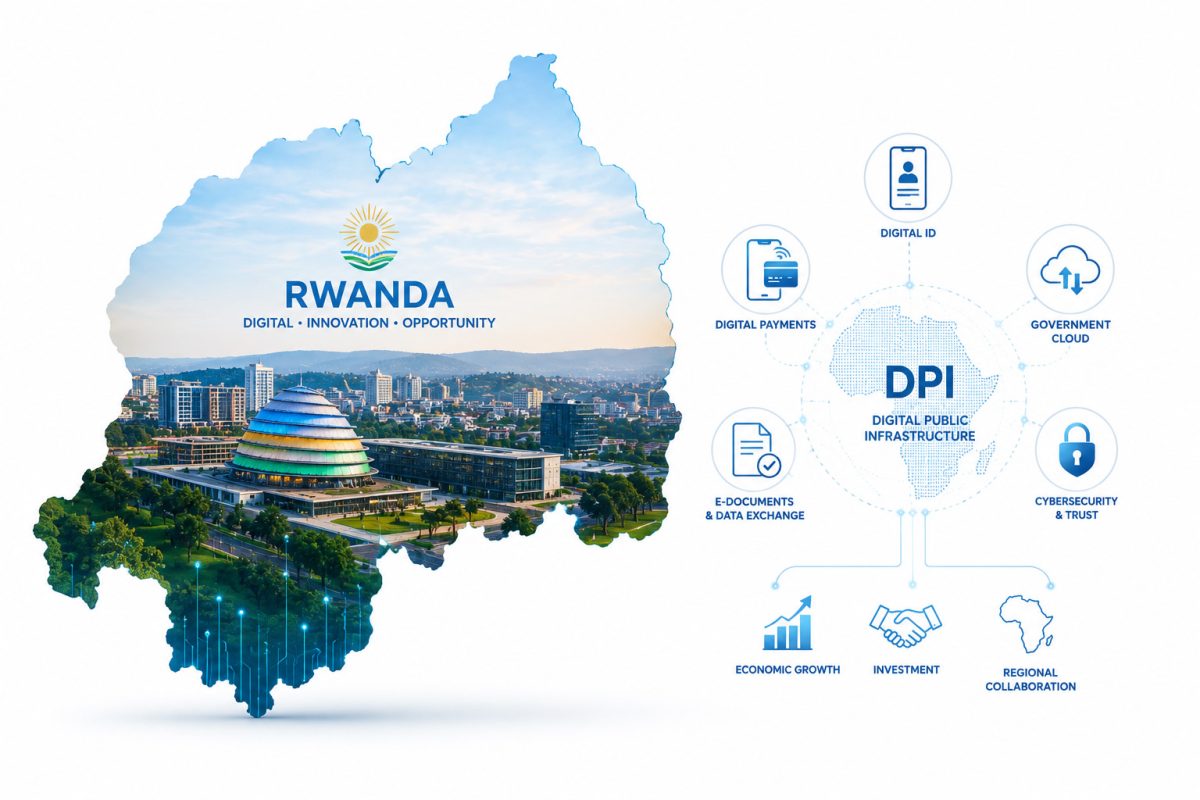
Rwanda is moving beyond using digital public infrastructure (DPI) solely to modernise government services, positioning its digital ecosystem as a platform for economic growth, investment and regional collaboration across Africa.
The country has spent more than a decade building interconnected digital systems, including digital identity, interoperable payments and online public services. Rather than treating these as isolated government projects, Rwanda is integrating them into a broader strategy designed to attract businesses, support innovation and create technologies that can be replicated across the continent.
Central to the approach is the creation of interoperable digital platforms that allow government agencies, financial institutions and private-sector providers to exchange data securely and deliver services more efficiently. Officials believe this foundation lowers barriers for businesses entering the Rwandan market while creating opportunities for local technology companies to develop solutions that can be exported to neighbouring countries.
One of the country’s flagship platforms is Irembo.Gov, which enables citizens and businesses to access hundreds of public services online. Combined with a national digital identity system and integrated payment infrastructure, the platform has helped simplify service delivery while reducing administrative costs and processing times. These investments are also supporting Rwanda’s ambitions in artificial intelligence, digital trade and financial inclusion.
Rwanda’s strategy is closely aligned with its long-term national development plans, which place digital infrastructure at the centre of economic transformation. By investing in shared digital systems rather than standalone applications, the government aims to create an ecosystem where both public institutions and private companies can build new digital services on common infrastructure.
The model is increasingly attracting attention from policymakers across Africa as governments seek practical ways to accelerate digital transformation while improving public service delivery. Rwanda is positioning itself as a testing ground for emerging digital technologies and governance models that can be adapted by other countries with similar development ambitions.
As demand for secure digital identity, interoperable payment systems and trusted public platforms continues to grow, Rwanda believes its experience demonstrates how digital public infrastructure can evolve from a government modernisation programme into a catalyst for economic growth, innovation and regional digital integration.