
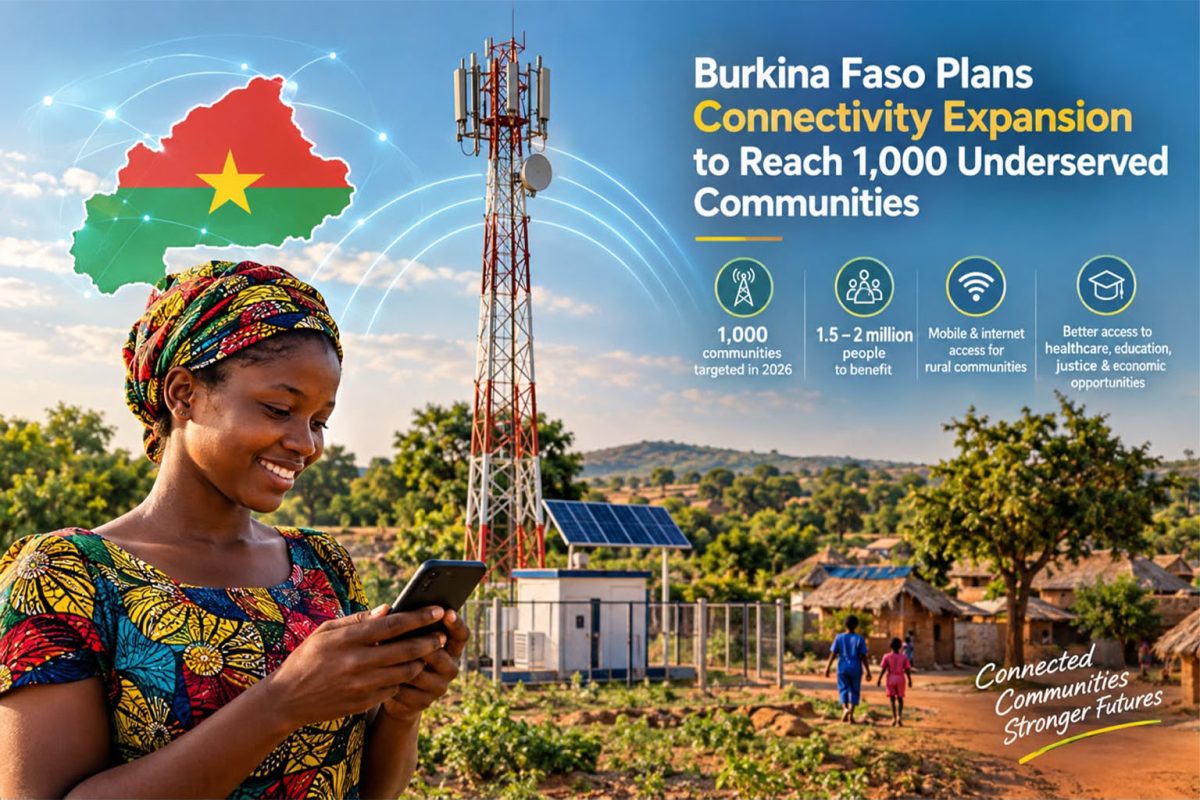
Burkina Faso is moving to extend mobile and internet access to 1,000 underserved communities in 2026 as the government steps up efforts to close the country’s digital divide. The expansion is being supported through the Burkina Faso Digital Transformation Acceleration Project (PactDigital), which is working with the government on its “Zero White Zones” initiative. The programme is targeting communities that remain outside the reach of reliable telecommunications networks.
Nearly 2,000 localities currently lack mobile phone and internet coverage, according to PactDigital. Together, these areas account for an estimated 10 to 12 per cent of Burkina Faso’s territory, leaving many communities without consistent access to online services and digital opportunities.
The planned rollout would address roughly half of the remaining uncovered locations and is expected to benefit between 1.5 million and 2 million people. Most of those targeted live in rural areas, where limited infrastructure has restricted access to digital services.
Beyond providing basic connectivity, the initiative is intended to support wider digital inclusion. Improved network access could enable more residents to use online services in areas including healthcare, education, justice and economic activity, while giving rural communities greater opportunities to participate in the digital economy.
PactDigital has undertaken mapping exercises to determine where connectivity gaps are most significant and help guide infrastructure investment. The approach is designed to ensure that new telecommunications infrastructure is directed towards communities where it can have the greatest impact.
Environmental and social considerations are also being incorporated into the rollout. Infrastructure projects, including telecommunications towers, are subject to impact assessments designed to identify potential risks and establish measures to address them. The project is being implemented in accordance with the World Bank’s Environmental and Social Standards as well as Burkina Faso’s national environmental requirements.
Authorities are also engaging local communities as part of the process. Public awareness campaigns led by the Ministry of Digital Transition, Posts and Electronic Communications are seeking to explain the benefits of telecommunications infrastructure, address concerns and support access to land required for tower construction.
The government’s connectivity push comes as digital access becomes increasingly important to the delivery of public services and economic activity. Extending networks into previously disconnected areas could therefore help ensure that digital transformation reaches beyond Burkina Faso’s major urban centres.
With 1,000 communities targeted during 2026, the programme represents a significant step towards the government’s longer-term objective of eliminating connectivity “white zones” and expanding inclusive access to the country’s growing digital ecosystem.