
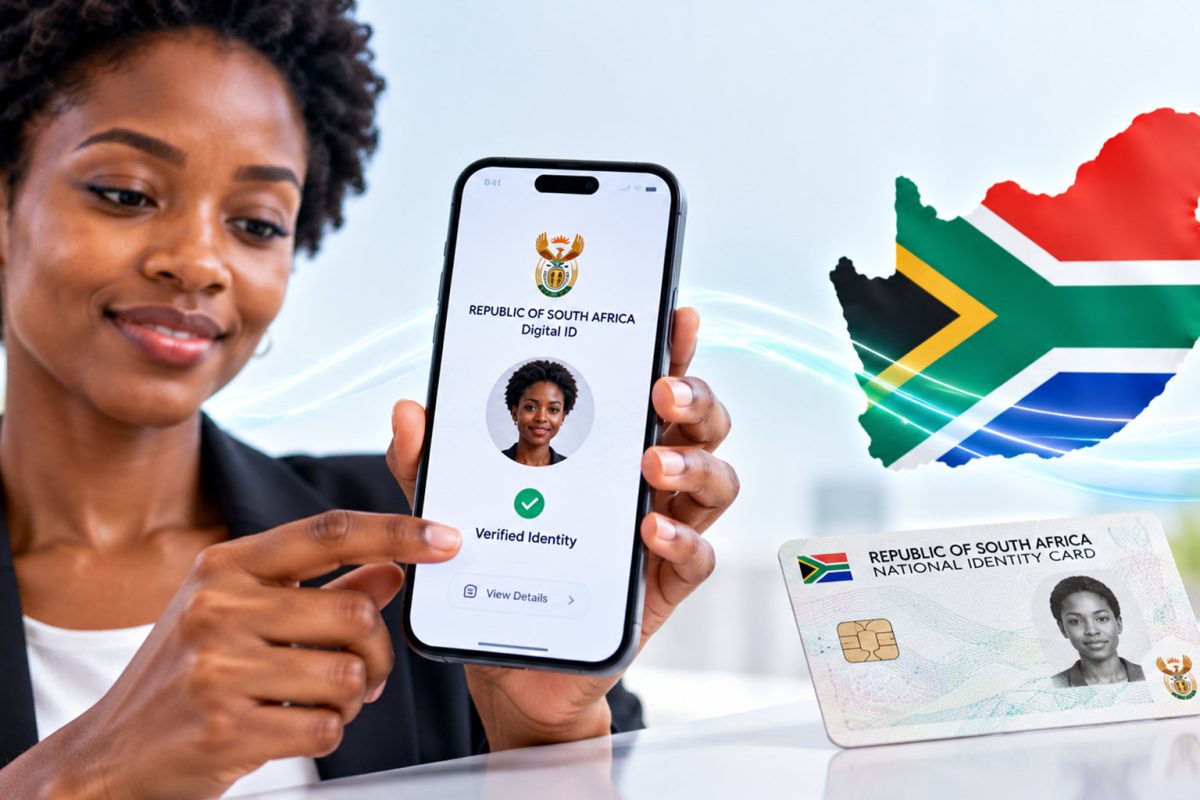
South Africa has unveiled the first working prototype of its national Digital ID, marking a major step in the government’s plan to transform how citizens access identity and Home Affairs services.
Home Affairs Minister Leon Schreiber demonstrated the new digital credential at Constitution Hill, using his own personal information to showcase what he described as the country’s first operational Digital ID.
The smartphone-based credential is intended to complement South Africa’s physical Smart ID card and form part of a wider shift away from paper-based, office-centred government services. The Department of Home Affairs wants citizens increasingly to be able to access services digitally, including through smartphones and an expanding network of participating bank branches.
“This is my own, real Digital ID credential,” Schreiber said.
Under the proposed system, citizens who opt in could eventually receive government services more proactively. For example, Home Affairs could alert users before a passport expires, pre-populate a renewal using information already held by government, allow biometric verification and payment digitally, and arrange delivery of the replacement document.
Schreiber summarised the objective simply: “No queue. No form. Not even an application.”
The government is currently considering public comments on draft regulations for the Digital ID system. Participation is expected to remain voluntary, while physical Smart ID cards will continue to be available. The department has also indicated that users should be able to see when their personal information has been accessed.
The Digital ID programme forms part of a broader modernisation of South Africa’s identity and immigration infrastructure. Home Affairs is expanding its services through bank branches, developing electronic travel authorisation for visa and immigration processes, and planning further reforms including electronic passports and automated border controls.
At the same time, South Africa is preparing to phase out its long-standing green ID book. Production is scheduled to end on 31 March 2027, with the document no longer recognised as valid identification from 31 March 2028.
The department is also planning a national campaign to identify and document citizens who remain outside the formal identity system, with mobile biometric teams expected to play a role.
Together, the reforms signal a shift towards digital identity becoming a core component of South Africa’s wider digital government infrastructure, designed to make public services more accessible, secure and citizen-focused.