
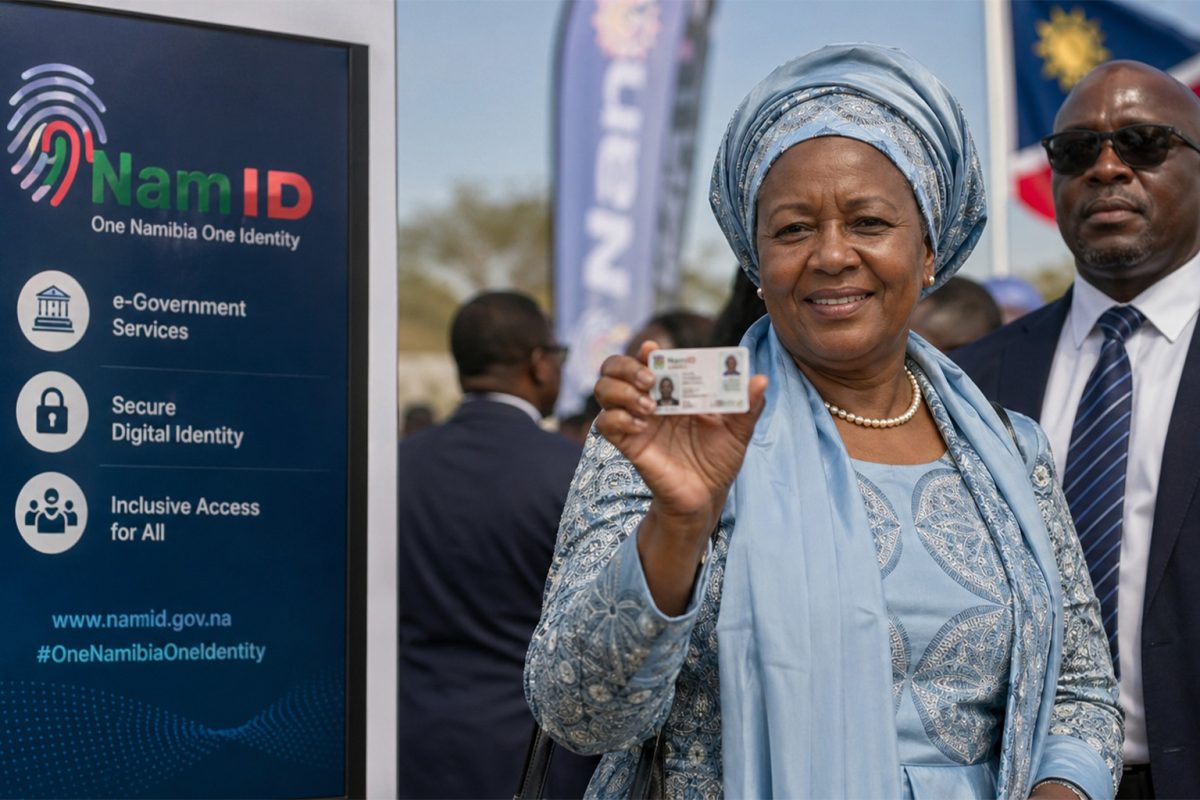
Namibia is accelerating the rollout of its next-generation digital identity programme, positioning it as a central pillar of the country’s transition toward fully digital public services.
Recent updates from government stakeholders indicate that Namibia is expanding its national ID infrastructure to support secure online authentication across a growing number of e-government platforms. The initiative aims to simplify how citizens access services such as licensing, social benefits, and civil registration, while strengthening data security and system reliability.
Officials say the enhanced digital identity framework will introduce stronger biometric verification and improved integration with backend government systems. By creating a single, trusted credential, authorities expect to reduce duplication across agencies and improve efficiency in service delivery.
The programme is also closely linked to Namibia’s broader push toward e-government cloud adoption. By migrating services to more scalable digital environments, the government aims to ensure that platforms remain accessible even as demand increases. Digital identity plays a critical role in this shift, acting as the secure gateway through which citizens interact with online services.
Cybersecurity has been identified as a key priority in the rollout. As more sensitive data is stored and processed digitally, ensuring robust protection mechanisms is essential. Industry experts note that global technology providers such as Thales and IN Groupe are widely involved in similar national ID programmes, offering encryption, credential management, and authentication technologies.
In parallel, Namibia is exploring how digital identity can support financial inclusion by linking ID systems with banking and mobile payment platforms. This integration could enable faster onboarding for financial services, particularly in rural areas where access remains limited.
Analysts say Namibia’s approach reflects a growing consensus across Africa: that digital identity is not just an administrative tool, but a foundational component of the digital economy. By connecting identity, services, and payments, governments can create more inclusive and efficient systems.
While implementation challenges remain—particularly around infrastructure and public awareness—the government’s continued investment signals strong commitment. If successfully scaled, Namibia’s digital identity programme could significantly enhance access to services while reinforcing trust in digital platforms.