
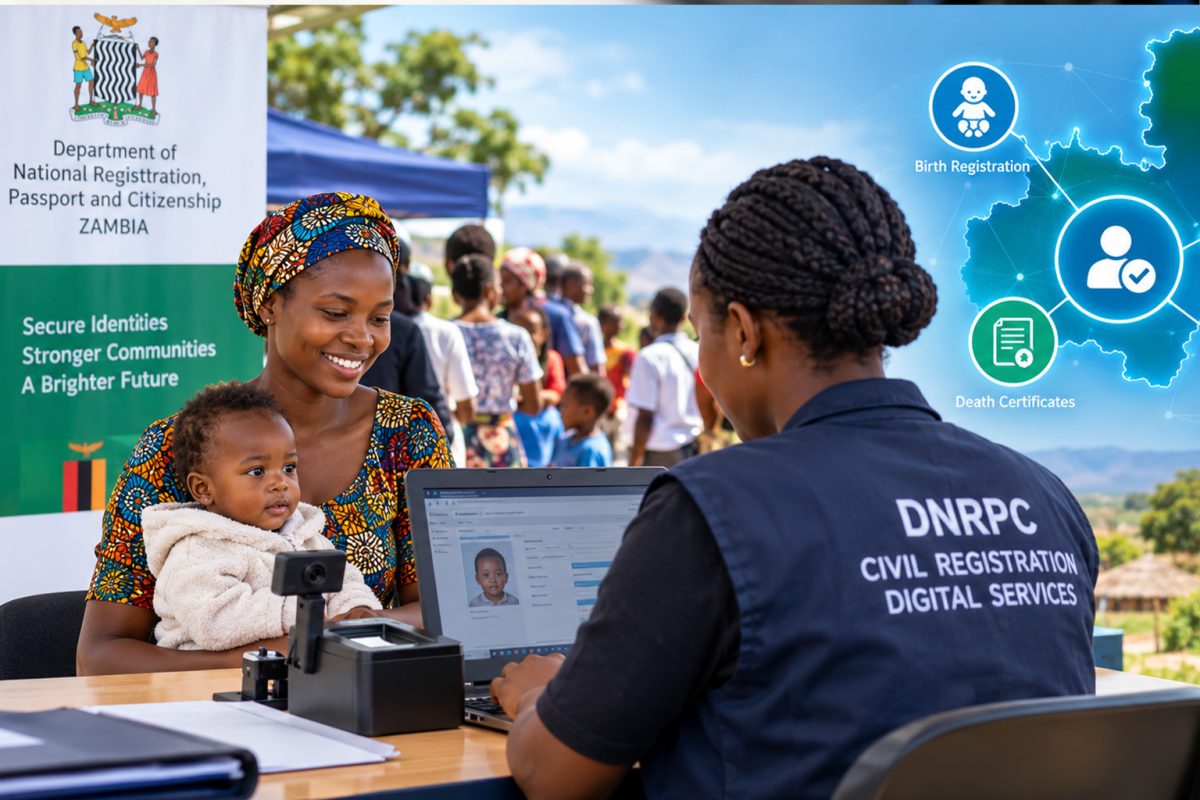
Zambia is stepping up efforts to strengthen civil registration and access to legal identity, with authorities in Muchinga Province expanding digital registration services in Lavushimanda District.
The initiative, being implemented by the Department of National Registration, Passport and Citizenship (DNRPC), is designed to make it easier for residents to obtain essential identity and civil status documents while extending the country’s digital registration infrastructure to communities outside major urban centres.
More than 3,000 children under the age of five have been registered in Lavushimanda over the past four months, according to District National Registration Officer Kasapo Musonda.
Musonda has called on residents to take advantage of the ongoing programme, which covers birth registration, adult identification and the issuance of death certificates. “We want to urge the general public in Lavushimanda to take advantage of this very important national exercise,” he said.
Unlike temporary registration campaigns, the programme is intended to provide a continuous pathway for residents to obtain and update civil registration records.
Technology is central to the process. Registrations are being handled through the Integrated National Registration Information System (INRIS), Zambia’s digital platform for managing national registration information.
INRIS was introduced across 26 District National Registration Offices in March 2022, connecting local registration offices to a common national system. The wider digitalisation programme has also enabled citizens to access selected registration services electronically, including applications for national identity cards and requests for birth and death certificates.
Authorities are also relying on collaboration with the Ministry of Health to reach residents who may not routinely visit registration offices. Environmental Health Departments are helping communicate information about the programme through their existing community-level activities.
The expansion in Lavushimanda forms part of Zambia’s broader effort to improve birth registration and ensure more citizens have recognised legal identities. The government has set a target of reaching a 50 percent birth-registration rate by 2026, supported by a nationwide campaign aimed at registering millions of people.
Improving civil registration is expected to have wider implications for access to public services, social protection, financial services and other activities that require proof of identity.
By combining digital infrastructure with community-based outreach, Zambia is seeking to close longstanding gaps in civil registration while building a more comprehensive and accessible national identity ecosystem.