
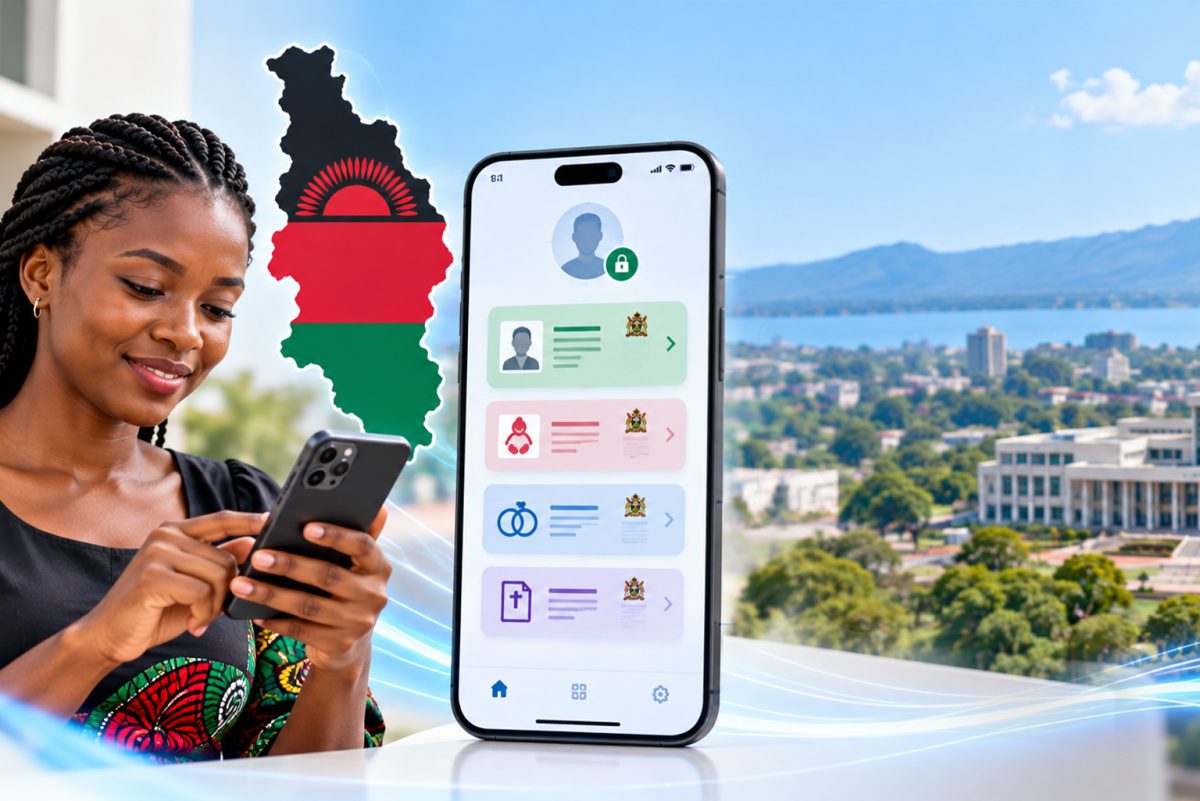
Malawi has launched the Nzika Digital ID Wallet, giving citizens a new way to access and manage official identity documents while removing expiry dates from national identity cards. The initiative was unveiled in Lilongwe on September 16 during International Identity Day and Africa ID Day, marking a decade of cooperation between the Malawian government and the United Nations Development Programme (UNDP) on national registration and identification.
Developed by the National Registration Bureau (NRB) and UNDP Malawi through the Inclusive Digital Transformation for Malawi programme, the wallet allows users to access digital versions of official credentials. These include national identity cards, birth certificates, marriage certificates and death certificates.
Malawi becomes the fifth African country to operationalise a digital ID wallet, following Ghana, Ethiopia, Côte d’Ivoire and Nigeria. The programme has received support from the European Union, Irish Aid and the Royal Norwegian Embassy.
At the same time, the government has ended the requirement for national identity cards to carry expiry dates. The change took effect on September 16, removing the need for citizens to periodically renew their cards.
“A person’s identity does not expire,” said Minister of Homeland Security Peter Mukhito.
He described the digital wallet as a significant change in how citizens interact with identification systems.
“Today, we are not simply launching another application. We are changing the way Malawians prove who they are. We are taking national identity into the digital age,” Mukhito said.
The minister also stressed that the digital credential is intended to work alongside the existing physical card rather than replace it.
“The Nzika Wallet does not replace the physical National ID card. It complements it,” he said, adding that citizens would be able to choose between physical and digital credentials.
United Nations Resident Coordinator Rebecca Adda-Dontoh said legal identity remains an important foundation for participation in society and access to opportunities.
“Legal identity is essential infrastructure for rights, inclusion and opportunity,” she said.
She also highlighted the importance of ensuring that digital identity expansion remains inclusive, with privacy and accessibility incorporated into implementation.
The launch comes after significant progress in Malawi’s national registration programme. UNDP said registration coverage among eligible citizens aged 16 and above is now close to universal. More than 22,000 people had already registered for the Nzika Wallet by the launch date.
The government and its partners see the wallet as part of a wider effort to create more accessible digital public services and establish a trusted digital identity infrastructure for Malawi’s growing digital economy.