
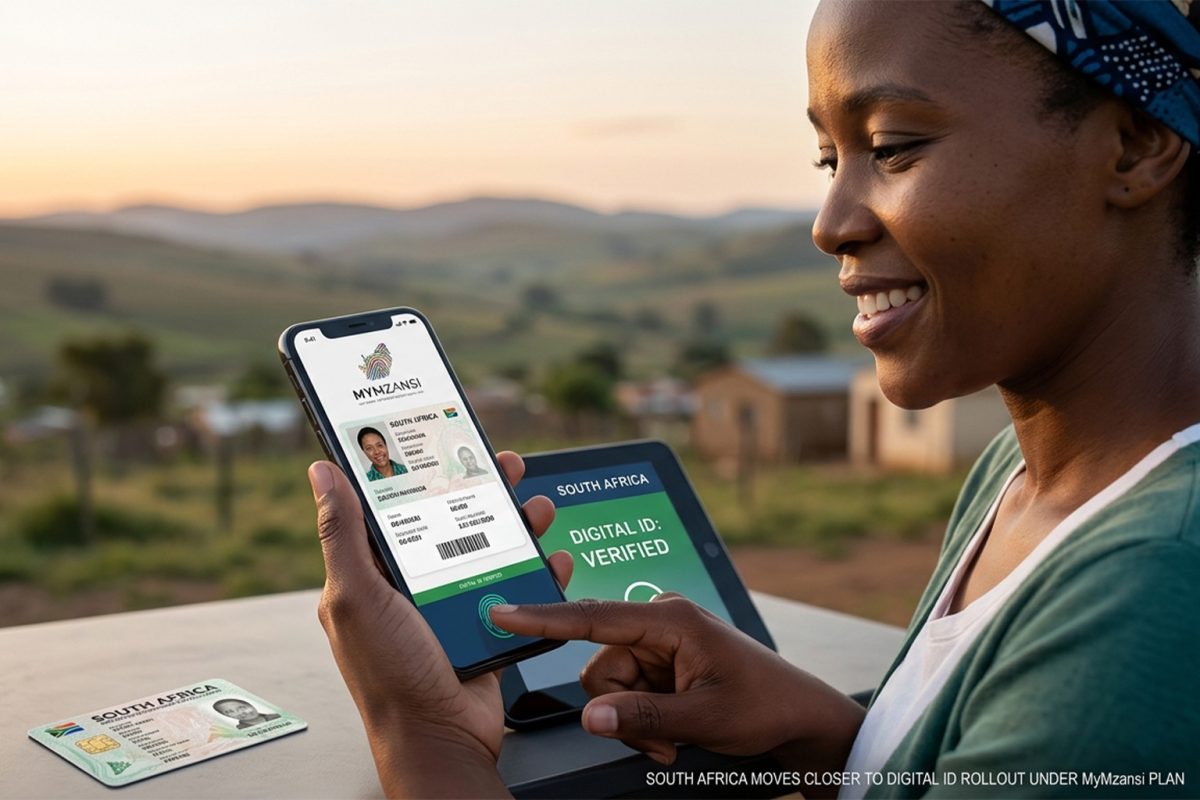
South Africa is targeting September to complete key regulatory preparations and advance testing of its planned national digital identity system as the government moves to scale projects under the MyMzansi digital public infrastructure programme.
The digital ID initiative forms part of a wider government effort to modernise public services and build shared digital infrastructure. The programme is being implemented alongside Operation Vulindlela, a reform initiative launched in 2020 to support inclusive economic growth and strengthen the state’s ability to deliver essential services.
A recent progress report from National Treasury and the Presidency shows that most of the government’s digital public infrastructure reforms are advancing. About 80 percent of the activities identified in the DPI programme are considered on track, while another 20 percent have been completed.
The MyMzansi platform has now reached a production-ready pilot stage, while work continues on the regulatory framework for the national digital ID. The government is also expanding Smart ID issuance through partnerships with commercial banks, providing an additional route for citizens to access identity services.
The digital matric certificate has emerged as the first practical use case for MyMzansi. Authorities are also progressing with MzansiXchange, a pilot designed to support data interoperability between government systems, while work continues on a modernised digital payments platform and improvements to the Gov.za government portal.
By September, the government intends to complete the controlled environment required to prepare MyMzansi for wider scaling. Plans also include expanding the Gov.za platform and design system to participating departments, testing the digital matric certificate at scale and evaluating updated interoperability and architecture standards.
Further developments are expected later in the year. By November, authorities aim to begin work on digital payment credentials, wallet functions and a government trust framework. Citizen-facing applications in areas including justice, policing and transport are expected to follow, with March 2027 identified as a target for testing and deployment.
The digital ID remains one of the most significant components of MyMzansi, but its implementation has experienced delays compared with earlier timelines. President Cyril Ramaphosa has nevertheless committed to launching the national digital ID before the end of 2026.
The September milestone will therefore provide an important indication of whether South Africa can move from prototype development and regulatory preparation towards a functioning national digital identity ecosystem.