
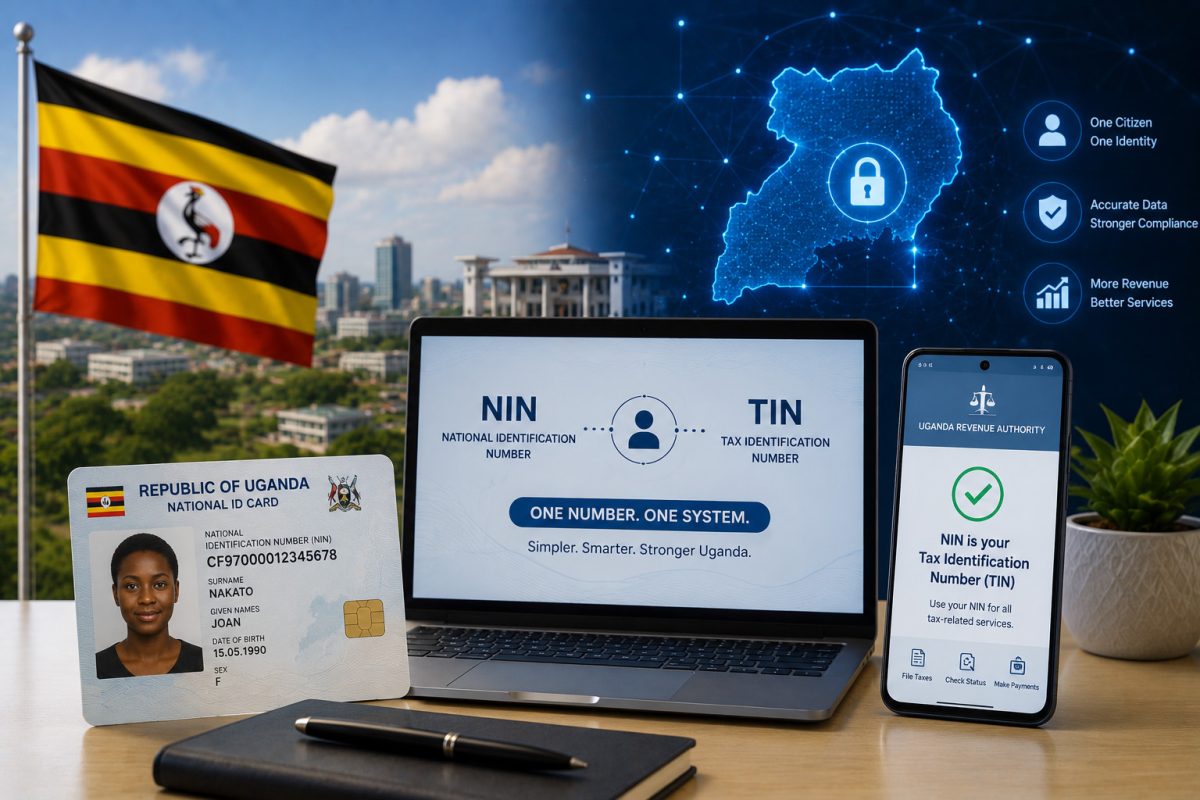
Uganda’s Cabinet has approved a major change to the country’s tax registration system, allowing the National Identification Number (NIN) to serve as the Tax Identification Number (TIN). The decision was reached during a Cabinet meeting held at State House Entebbe on August 31, 2026, according to the Government of Uganda.
Under the new arrangement, the NIN issued by the National Identification and Registration Authority (NIRA) will be used for tax-related transactions. The move is expected to eliminate the need for citizens to maintain separate identification numbers for national identity and taxation.
Minister of ICT and National Guidance, Justine Kasule Lumumba said the reform is intended to address challenges associated with Uganda’s existing tax registration process, which has largely relied on separate and manual systems.
“For years, our tax registration system has relied on a separate, largely manual TIN-based process,” Lumumba said. “It has served its purpose, but it has also left us with outdated and inconsistent records, and that creates real weaknesses in data accuracy, compliance, and service delivery.”
She explained that connecting the tax system to the national identification framework will create a more reliable record of taxpayers while allowing government databases to work more effectively together.
“By adopting the NIN as the tax identification number, we are establishing one consistent identity for every taxpayer,” Lumumba said.
The government expects the integration to improve the accuracy of taxpayer records and make it easier to identify and trace individuals for tax purposes. Officials also anticipate that the change could strengthen compliance and reduce revenue losses.
“It will help us improve compliance, reduce revenue leakage, and make it simpler for citizens to register and communicate with the tax authorities,” the minister said.
The reform will bring national identification and taxation systems closer together, reducing some of the duplication Ugandans have faced when accessing government and financial services.
Lumumba further said the system could provide government with greater visibility of taxpayers’ economic activities, including income earned outside Uganda.
“It will also give us visibility into worldwide income,” she said.
The government says the integration is ultimately aimed at easing administrative processes for citizens while strengthening tax administration, national planning and public service delivery.