
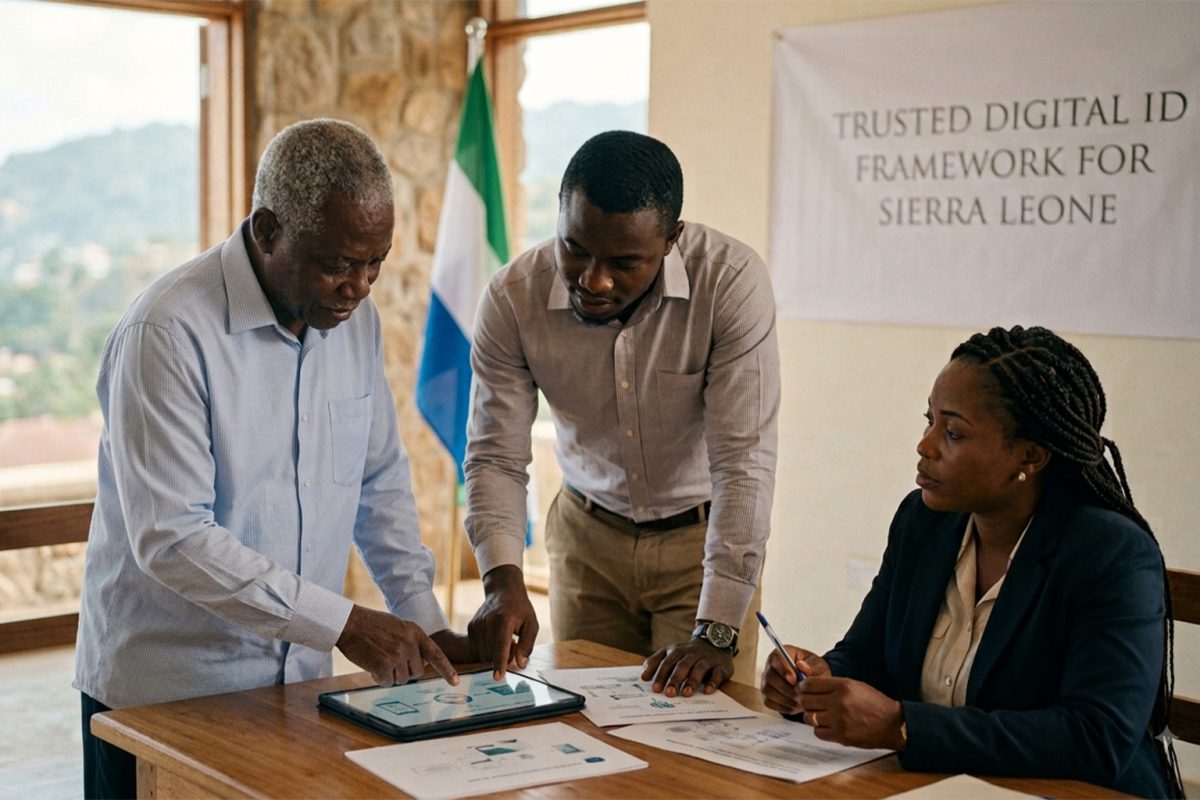
Sierra Leone is stepping up efforts to establish a trusted digital identity ecosystem, bringing together private companies, government agencies and development partners to help shape the policies, governance structures and technical standards underpinning the system.
The consultations, held in Freetown, are part of a broader push to strengthen the country’s digital public infrastructure (DPI) and create an identity system that can support access to both government and private-sector services.
The initiative follows a Memorandum of Understanding signed in July with Bhutan and the Sign Foundation to support Sierra Leone’s DPI strategy. The planned framework is designed around open-source technology and verifiable credentials, allowing citizens to securely prove their identity or specific attributes when accessing services.
Government, business and development representatives participated in the discussions alongside financial institutions, universities and civil society organisations. Their focus included the legal and policy requirements needed to establish a digital identity environment based on privacy, security, data sovereignty and international standards.
According to the government, the consultations are intended to “develop the policies, governance frameworks, and technical foundations required for a trusted, secure, and inclusive digital identity ecosystem.”
Sierra Leone’s national identification infrastructure is built on the Modular Open Source Identity Platform (MOSIP), which the government regards as a foundation for its wider digital transformation programme. The identity system is being developed alongside other components of the country’s DPI strategy, including digital payments and interoperable data exchange.
These three areas — trusted digital identity, secure and efficient digital payments, and the ability for government systems to exchange data — are viewed as essential building blocks for improving public services and expanding the digital economy.
The latest consultations also reflect a growing emphasis on involving businesses and other stakeholders early in the development of national digital infrastructure. Authorities believe collaboration will help ensure that the eventual system is practical, secure and capable of supporting a broad range of users and services.
Minister of Communications, Technology and Innovation Salima Bah has previously highlighted the importance of interoperability to Africa’s digital transformation, arguing that countries need systems capable of working across institutional and national boundaries.
The government plans to continue the stakeholder engagement process as it develops the framework. The consultations are expected to inform the regulations, governance arrangements and technical architecture needed to establish a reusable digital identity ecosystem.
For Sierra Leone, the effort represents another step towards making digital identity a core component of national digital infrastructure while creating a foundation for more connected public and private services.